Buying Guides
What Size Outboard Motor Do I Need? A Horsepower Guide by Boat Type
Nov
What size outboard motor do I need? It is the first question most boat owners ask, and choosing the right horsepower is the most important decision when you buy an outboard. Too little power and the boat struggles to get on plane with a full load. Too much and you exceed what the hull is rated for, add weight to the transom and spend more than you need to. This guide explains how to narrow it down.
Start with your boat’s capacity plate
Most boats sold in the United States carry a capacity plate (see the U.S. Coast Guard Boating Safety site for background) near the helm or on the transom. It lists the maximum horsepower the hull is rated for, along with maximum persons and weight. Never exceed the maximum horsepower on the plate. It is a safety limit, and going over it can also affect your insurance.
If your boat has no plate, contact the manufacturer or ask us. Do not guess.
What size outboard motor do I need for my boat type?
The ranges below are common starting points. Your boat’s rating, weight and how you use it decide the final choice.
| Boat type | Typical length | Common horsepower |
|---|---|---|
| Dinghy, tender, small inflatable | 8 to 12 ft | 2.5 to 9.9 HP |
| Jon boat, small aluminum fishing boat | 12 to 16 ft | 9.9 to 30 HP |
| Aluminum fishing boat, skiff | 16 to 18 ft | 40 to 90 HP |
| Pontoon | 18 to 24 ft | 60 to 150 HP |
| Bay boat, center console | 18 to 22 ft | 115 to 200 HP |
| Offshore center console | 23 ft and up | 200 to 300+ HP, often as twins |

Things that push you toward more power
- Heavy loads. If you regularly carry several people, coolers and gear, extra power helps the boat plane without straining.
- Watersports. Pulling skiers or tubes needs strong mid-range torque.
- Rough or open water. Reserve power makes it easier to hold speed in chop and get home in changing weather.
Things that point to less power
- Light, small hulls. Many inflatables and small aluminum boats are rated for low horsepower and handle best with a light motor.
- Calm water and trolling. If you mostly fish lakes at low speed, a smaller motor saves fuel and weight.
- Transom weight. A heavy motor on a light boat can make it sit low at the stern.
Do not forget shaft length
Horsepower is only half of the decision. The motor must also match your transom height, or it will ventilate or drag. Read our guide on how to measure transom height and choose shaft length.
Single engine or twins?
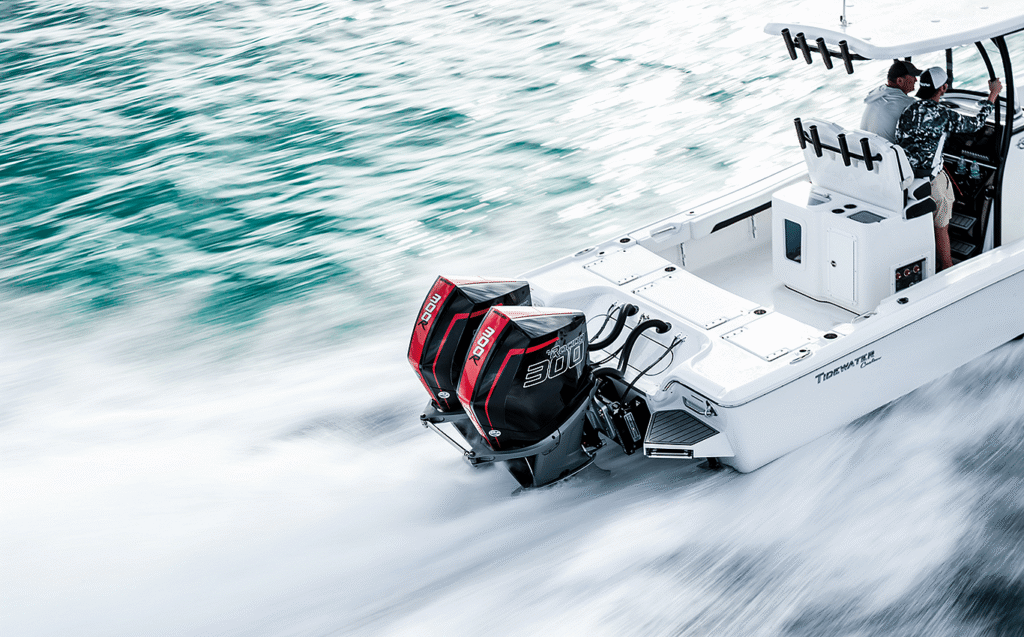
On larger boats, two smaller engines can replace one big one. Twins give you redundancy offshore and better low-speed handling, but cost more to buy and maintain. For most boats under about 22 ft, a single engine is simpler and more economical.
Get help choosing
Still asking yourself what size outboard motor do I need for your exact boat? We can help.
Browse Yamaha, Mercury, Honda and Tohatsu outboards, or contact Extreme Marines LLC with your boat’s make, length and capacity plate rating and we will suggest suitable motors.
Frequently asked questions
Can I put a bigger outboard on my boat than the capacity plate allows?
No. The maximum horsepower on the capacity plate is a safety rating for the hull. Exceeding it can make the boat unsafe and may void insurance.
What size outboard motor do I need if I carry heavy loads?
Choose toward the upper end of your boat’s rated range so the boat planes easily with people and gear.
Is it better to have too much or too little horsepower?
Within the rated maximum, a little more power than the minimum is usually better than too little, because an underpowered boat works the engine harder and struggles with load. Stay at or below the rated maximum.
What horsepower do I need for a 16 ft jon boat?
Most 16 ft jon boats are rated somewhere between 25 and 50 HP. Check your capacity plate for the exact maximum.
